 Apex Chimney SystemsApex Chimney Systems
Clean flue, safe home.
A chimney sweep in Orlando keeps your firebox, flue, and cap clear of the soot and creosote that build up every burning season. If you are searching for a chimney sweep near me before you light the first fire of the year, we sweep, camera-inspect, and report findings in plain terms across Central Florida. We do the dirty part, contain the mess with drop cloths and a HEPA vacuum, and leave the hearth cleaner than we found it.
Call (321) 524-3630
Tell us about your chimney sweep job — we'll get you a fast quote.
A firm, all-in price confirmed before we start — no surprises.
On time, done to standard, and tidy when we leave.
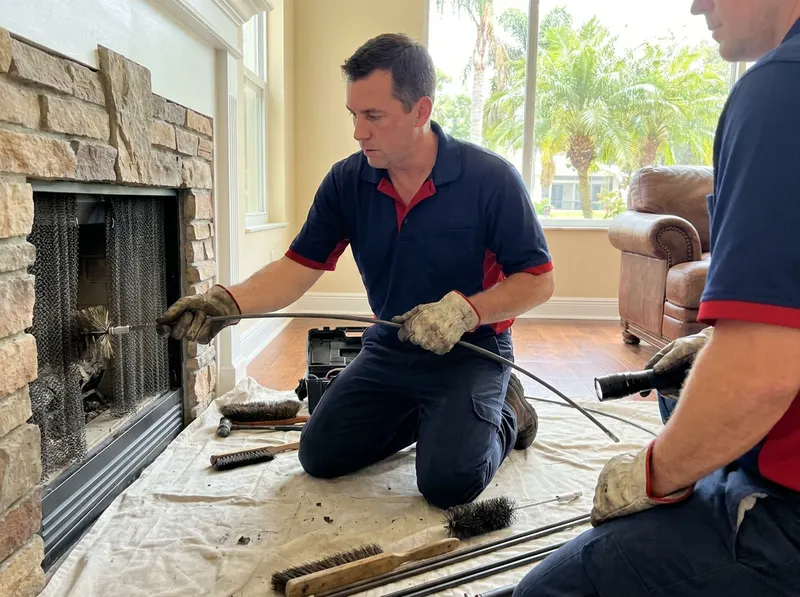
A wood-burning sweep matters more in Orlando than many homeowners expect because fireplaces here sit unused for long humid stretches, then get burned hard on the handful of cold snaps that hit Central Florida. Long idle periods let moisture, spider webs, and even bird or squirrel debris collect in the flue, and creosote that formed the previous winter hardens over the off-season. Older masonry chimneys in College Park and Delaney Park, where many homes date back decades, tend to show more creosote glazing than the newer prefab metal fireboxes common in Lake Nona and Baldwin Park builds.
Choose a wood-burning sweep when you actually burn cordwood and see black or brown flaky buildup on the flue walls. If your fireplace was converted to gas logs, a wood sweep is the wrong service, and if you only need the annual look-over without heavy cleaning, an inspection alone may fit better. The trade-off is straightforward: a sweep removes the fire hazard and improves draft, but if the buildup has turned into thick glazed creosote, brushing alone will not clear it and a heavier removal step gets added to the visit.
Most Orlando wood-burning systems we service are seasonal-use fireplaces, so a once-a-year sweep before the first cool evening near Lake Eola Park is a reasonable rhythm. Homes in Thornton Park and Colonialtown with narrow original flues need careful brush sizing to avoid loosening old mortar joints, while Windermere and Dr. Phillips properties often have taller chimneys that require rod extensions from the roof or firebox. We tarp and drop-cloth the hearth before any brushing so soot stays contained inside the work area, which matters in tighter Audubon Park and Conway living rooms.
| Standard single-flue wood-burning sweep | $150-$300 |
| Sweep with heavy/glazed creosote treatment | $300-$500+ |
| Sweep plus basic Level 1 inspection | $200-$375 |
Once a year is the common guideline for Orlando wood-burning fireplaces, ideally before the first cold snap. Because most Central Florida fireplaces sit idle for long humid stretches, a pre-season sweep clears off-season debris along with prior soot and creosote.
No, a wood-burning sweep in Orlando is for fireplaces that burn cordwood, not gas logs. Gas systems need a different service focused on burner and venting checks rather than creosote removal.
A properly done wood-burning sweep in Orlando keeps mess contained to the hearth area. We lay drop cloths and tarps and use enclosed brushing methods so soot stays inside the work zone, which is important in tighter Thornton Park and Audubon Park living rooms.
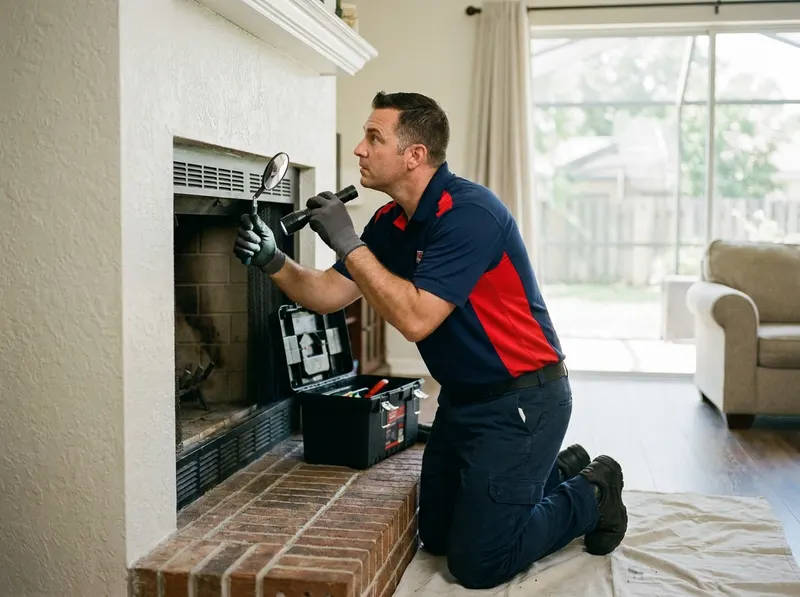
A Level 1 inspection is the right scope when nothing about the system has changed. If you burn wood a few times each cool season in College Park or Delaney Park and the fireplace has performed the same way for years, a Level 1 confirms the flue is clear and the accessible masonry is intact. It does not involve opening walls or running a camera through the full flue length — that scope belongs to a Level 2 inspection, which is warranted when a home changes hands, after a chimney fire, or when you switch fuel or appliance type. The trade-off is straightforward: Level 1 is faster and lower cost but limited to what is visible without special access, so if you are buying a home in Baldwin Park or Lake Nona, a Level 2 is usually the better fit.
Orlando's climate shapes what a Level 1 inspection tends to find. Long humid summers and short burning seasons mean many chimneys sit idle for months, so animal nests, spider webs and debris in the flue are common findings in Conway, Audubon Park and Colonialtown. Homes near tree-heavy lots around Loch Haven Park and Harry P. Leu Gardens see leaf litter collect in caps and crowns. Older masonry chimneys in Thornton Park and around Lake Eola Park can show hairline mortar cracks from decades of thermal cycling, while newer Dr. Phillips and Windermere builds more often have factory metal flues where the inspection focuses on connectors, clearances and cap condition.
During the visit we look at the firebox and damper from inside, check the smoke chamber and accessible flue with a light, and walk the exterior for cap, crown and flashing issues we can see from the ground or roof. You receive a plain summary of what was found and whether the system is safe for continued use. If the inspection turns up heavy creosote or a blockage, a sweep is the next step; if we see structural concerns beyond what a Level 1 can assess, we recommend the appropriate follow-up rather than guessing. An inspection is best scheduled before the first cool front rolls through Orange County and you light your first fire of the season.
| Level 1 inspection, single flue | $99–$150 |
| Level 1 inspection, multiple flues | $150–$250 |
| Inspection with same-visit basic sweep | $200–$350 |
Once a year is the standard recommendation for any chimney in continued use in Orlando, ideally before the first cool front when you plan to burn. Annual timing catches creosote and any nesting debris that built up during the warm, idle months.
A Level 1 inspection in Orlando is a visual assessment, not a cleaning. If the inspection finds creosote or a blockage, we can perform a sweep on the same visit or schedule one, quoted separately from the inspection.
A Level 2 inspection is the correct scope for a home sale or transfer in Orlando because it includes camera and accessible-space checks. A Level 1 is intended for systems in continued use with no changes, so it does not cover a real estate transaction.
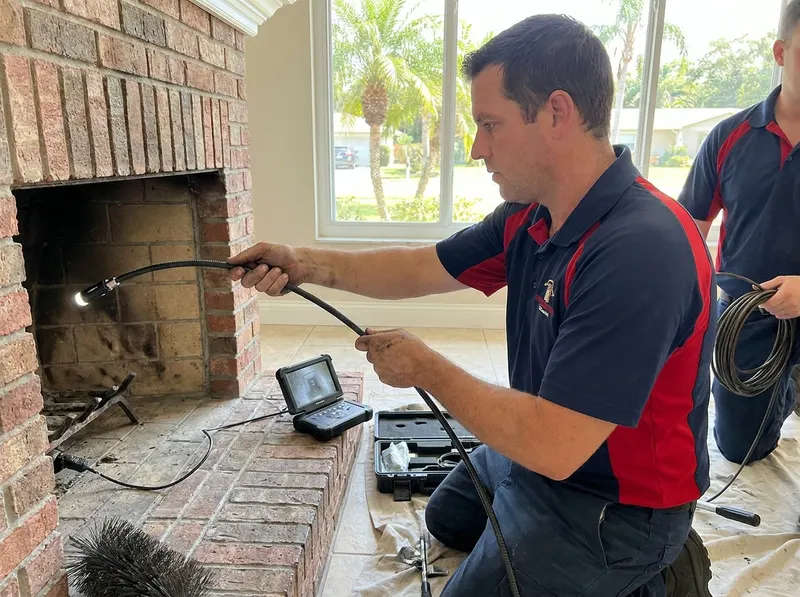
A Level 2 inspection is the right call when something has changed or something is suspected. Order it after a chimney fire, before buying or selling a home, or when you switch fuels or install a new insert. In College Park and Colonialtown, many of the older masonry chimneys have clay tile liners that crack with age and thermal shock, and those hairline separations only show up on camera — a visual Level 1 will miss them. For a routine annual check on a chimney that has not changed, a Level 1 visual is usually enough, and the trade-off is simple: Level 2 costs more and takes longer, but it produces recorded proof of what the flue actually looks like inside.
The camera pass matters most in two Orlando situations. Real-estate transactions across Baldwin Park, Lake Nona and Thornton Park often require documented flue condition before closing, and a video report settles disputes that a written note cannot. The other is insurance: after a flue fire, carriers want confirmation of whether the liner cracked, and stills from inside the flue give a claims adjuster something concrete. Homes in Delaney Park and Audubon Park with tall two-story flues are exactly where a camera earns its keep, because the top third of those flues is impossible to judge from the firebox or the roof.
Access drives both time and price. A straight, single clay-lined flue in a Conway ranch reads quickly. A stacked or offset flue, a heavy soot layer, or a capped chimney in Dr. Phillips or Windermere adds time because the flue may need a light sweep first so the camera lens can actually see the liner surface. We tell you before starting if a pre-inspection cleaning is needed rather than surprising you on the invoice. The deliverable is the same either way: footage of the full flue and a plain-language report noting cracks, gaps, creosote glaze, or blockages, with locations marked so any follow-up repair is targeted.
| Level 2 camera inspection, single straight flue | $175–$250 |
| Level 2 camera inspection, tall or offset flue | $250–$350 |
| Camera inspection with light pre-clean for visibility | $300–$450 |
| Additional flue in same chimney | $100–$175 |
You need a Level 2 camera flue inspection in Orlando after a chimney fire, before buying or selling a home, or when you change fuel type or install a new insert. Any of those events can affect the flue where the eye cannot see, and the camera documents it.
A Level 1 inspection in Orlando is a visual check of accessible areas, while a Level 2 adds a video camera run down the full flue. The Level 2 catches liner cracks, joint gaps and hidden blockages that a visual check misses in older College Park and Colonialtown chimneys.
Yes. Every Level 2 camera flue inspection in Orlando includes video footage and still images of any defects, plus a written condition report you can keep for insurance or a real-estate file.
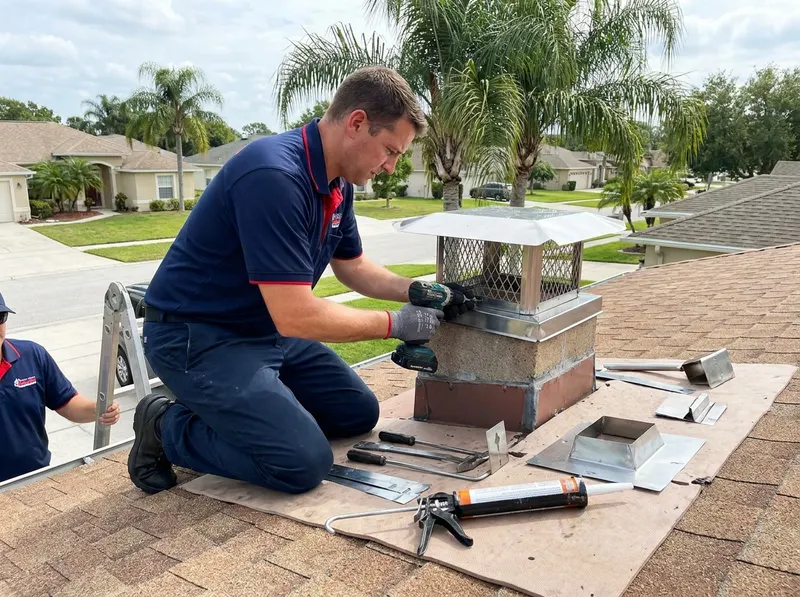
A chimney cap earns its keep during Orlando's summer storm season, when afternoon downpours drive water straight down an open flue. Rain inside a chimney rusts the damper, breaks down mortar joints, and stains the firebox and interior wall. Homes in older neighborhoods like College Park, Colonialtown, and Delaney Park often have clay-tile flues from the mid-century that were never capped or lost their caps years ago, so an open flue is common on these blocks. Newer construction around Lake Nona and parts of Windermere usually has factory metal chimneys that need a cap sized to the pipe rather than to a masonry flue.
Choose a cap replacement when the existing cap is rusted through, the mesh screen is torn, or the whole unit was knocked loose in a storm. A single-flue stainless cap is the standard fix and lasts for years in Florida humidity. Step up to a multi-flue cap when the chimney has two or more flues sharing one crown, which is common on larger homes in Dr. Phillips and Baldwin Park. Copper is an option when the cap is visible from the street and you want it to match architectural trim, though it costs more than stainless for the same coverage. The trade-off is simple: a cheaper galvanized cap can rust in a few seasons here, while stainless or copper holds up to the moisture and salt-tinged air.
The mesh screen on a cap does double duty in Orlando. It keeps squirrels, raccoons, and birds out of the flue, which matters near tree-heavy areas like Audubon Park and Conway where wildlife is active, and it acts as a spark arrestor so embers do not land on the roof. If a cap is missing its screen, animals can nest inside the smoke chamber and block the flue entirely. When we install or repair a cap, we also look at the crown, the concrete slab the cap sits on, because a cracked crown lets water in even with a good cap on top.
Booking is a free on-site visit. Flue openings vary, so an accurate cap requires measuring the actual tile or pipe rather than guessing, whether the home is a bungalow near Thornton Park or a two-story in Windermere. We confirm the exact price after measuring; the ranges below are honest ballparks for planning.
| Standard single-flue stainless cap, installed | $150-$450 |
| Multi-flue cap (2+ flues, shared crown) | $400-$900 |
| Custom copper cap | $500-$1,200+ |
| Cap repair (rescreen, re-secure, replace hardware) | $120-$300 |
| Factory metal chimney cap replacement | $150-$400 |
Chimney cap installation in Orlando typically runs $150 to $450 for a standard single-flue stainless cap installed. Multi-flue and custom copper caps cost more. The exact price is confirmed after we measure your flue on-site, and the quote is free.
Yes, a chimney cap is strongly recommended in Orlando because heavy summer rain drives water down an open flue, rusting the damper and eroding mortar. A cap also blocks animals and leaves, both common in tree-shaded areas like Audubon Park and Conway.
Yes, we replace caps knocked loose or blown off during Orlando storms. We measure the flue, install a properly secured stainless or copper cap, and check the crown underneath for any water damage while we are on the roof.
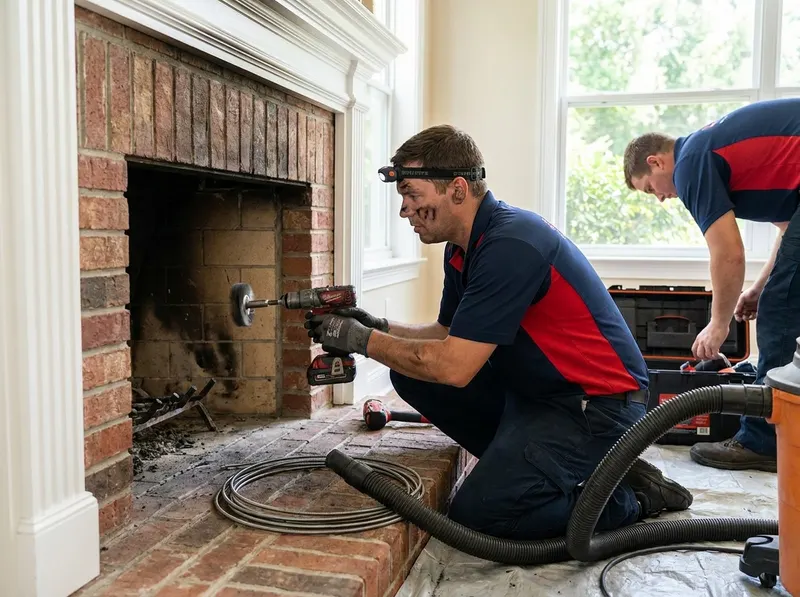
Creosote forms in three stages. First-degree is a light, sooty powder that a brush handles easily. Second-degree looks like dry, flaky tar. Third-degree is the dangerous one: a hard, glazed shell that fuels chimney fires and blocks the flue. In Orlando, most third-degree buildup shows up in homes where a fireplace is burned hard during a cold January snap and then sits unused through humid summers, so the deposit dries, hardens, and gets skipped year after year. Older masonry chimneys in College Park, Delaney Park, and Colonialtown are common candidates because their fireplaces predate modern EPA-certified inserts and often burned unseasoned local oak.
Removal method depends on how thick and glazed the layer is. Light glazing responds to a chemical creosote modifier that dries the deposit and makes it flake, followed by a mechanical sweep. Heavy, shiny third-degree buildup usually needs rotary tooling — chains or whips spun by a drill inside the flue to grind the glaze off the walls. This is more aggressive than a normal sweep and takes longer, which is why it is priced separately. On very thick deposits we may apply the modifier, let it work, and return to finish, rather than force a single pass that leaves glaze behind.
This service fits when an inspection finds shiny black or dripping deposits, when you smell a strong burnt odor, or when a routine sweep in a home near Baldwin Park or Audubon Park couldn't clear the flue. It is not the right call for a chimney that only needs a standard annual cleaning — that costs less and takes less time. The trade-off is straightforward: third-degree removal is more expensive and slower, but leaving glazed creosote in place is the single largest chimney-fire hazard, so treating it is the safer choice for any Orlando home that still burns wood.
After removal, we recheck the flue to confirm the glaze is cleared and note any spots where creosote reformed quickly, which can point to a burning habit or a draft issue worth addressing. Homes in Windermere, Dr. Phillips, and Conway that burn regularly through the season tend to build creosote faster and benefit from a check earlier the next year.
| Chemical modifier treatment (light third-degree glaze) | $150-$300 |
| Rotary chain/whip removal (heavy third-degree buildup) | $350-$650 |
| Multi-visit treatment for severe glazing | $500-$900 |
Third-degree creosote in an Orlando chimney looks like a hard, shiny black or tar-like glaze on the flue walls, sometimes with a strong burnt odor. A camera inspection during a free on-site visit confirms the stage before any removal is quoted.
A normal brush sweep cannot remove glazed third-degree creosote in Orlando homes. Glazed buildup needs a chemical modifier or rotary chain/whip tooling, which is why creosote removal is a separate, more involved service than a routine sweep.
Older masonry fireplaces in Orlando neighborhoods like College Park and Colonialtown often burned unseasoned wood and were swept irregularly, so soft creosote dried into a hard glaze over multiple seasons. Homes that burn hard in winter and skip cleaning are the most affected.
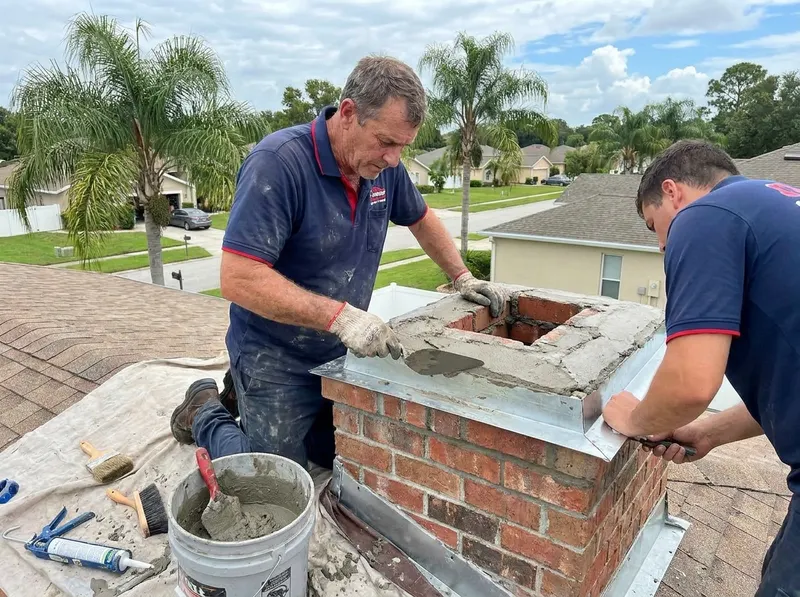
Crown and flashing problems are the leading cause of chimney-related water leaks in Orlando, and the two failures look identical from inside the house — a brown ring on the ceiling or a damp smell near the firebox. The crown is the sloped concrete slab that covers the top of the masonry; when it cracks, water soaks straight down into the brick and mortar. Flashing is the metal barrier tucked under the shingles and against the chimney; when its sealant dries out or the metal lifts, rain runs behind it and into the roof deck. We inspect both before quoting so the repair matches the actual point of entry.
Crown repair fits when the concrete cap shows hairline cracks, chips, or crumbling edges but the structure underneath is sound — a crown coat or patch seals it and buys years of protection. A full crown rebuild is the alternative when the slab has broken apart or was poorly poured to begin with; it costs more but is the right call once the concrete is failing structurally. Flashing repair fits when the metal is intact and only the sealant has failed; flashing replacement is warranted when the metal is rusted through or was never properly stepped into the shingles. We explain which situation applies rather than defaulting to the bigger job.
Older bungalows in College Park and Colonialtown often have original masonry chimneys where the crown was thin and has weathered decades of sun, so hairline cracking is common there. Homes in Baldwin Park, Lake Nona, and the newer Dr. Phillips and Windermere developments more often have flashing issues, since prefab chases and tract-built roofs rely heavily on sealant that degrades under Orlando UV. Two-story houses in Delaney Park, Thornton Park, Audubon Park, and Conway sometimes have steep or complex rooflines where flashing meets valleys — those take extra care to seal correctly. We serve all of Orange County and match the fix to how your particular roof and chimney were built.
Because Orlando gets intense afternoon storms from June through September, a compromised crown or flashing rarely stays a small problem — trapped moisture accelerates mortar decay and can rot roof framing. Catching it while it's still a sealant or patch job keeps the repair in the lower price range.
| Flashing resealing / minor repair | $250–$500 |
| Crown resurfacing / crown coat | $400–$900 |
| Full flashing replacement | $600–$1,400 |
| Full crown rebuild | $900–$2,500+ |
An on-site inspection is the only reliable way. In Orlando we check the crown for cracks and the flashing for lifted metal or failed sealant, since a ceiling stain near the fireplace can come from either. The repair depends on which one is letting water in.
Crown resurfacing in Orlando typically runs $400–$900, while a full rebuild of a failed crown runs higher. These are ballparks; the exact price is confirmed after a free on-site visit.
Yes. Flashing on newer Lake Nona, Windermere, and Dr. Phillips homes often fails because the roofing sealant dries out under Orlando sun. We reseal intact flashing or replace metal that has rusted or lifted.
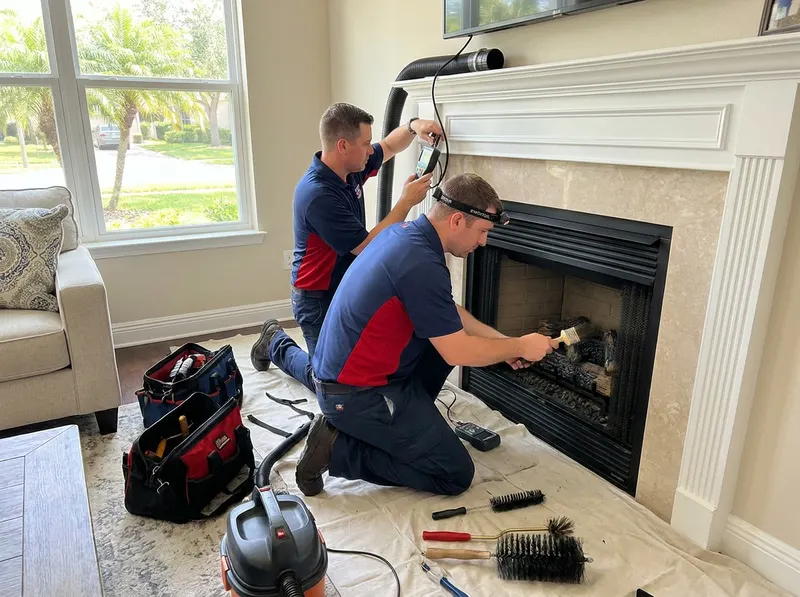
A gas fireplace runs cleaner than wood, but it still needs attention. Pilot assemblies clog, glass fogs from combustion residue, and venting can loosen or fill with debris over time. In Orlando homes, gas units often sit idle through the long warm season, so the first cool evening in October or November is when problems surface. A service visit before that first burn confirms the pilot lights, the flame pattern looks right, and the vent moves exhaust outdoors as designed.
The venting type drives most of the work. Direct-vent inserts, common in newer Lake Nona and Baldwin Park builds, pull combustion air from outside and exhaust through a sealed coaxial pipe, so the glass front and gasket seal matter for safety. Older Delaney Park and College Park homes more often have natural-vent gas logs in a masonry fireplace, which rely on the existing chimney flue to carry byproducts up and out. Those flues can hold nesting material, spalled brick, or a stuck damper that blocks the exhaust path. Checking that clearance is the core of a natural-vent service.
Gas service fits when your fireplace already burns gas and you want it verified safe before use or after a period sitting unused. If your flame looks lazy and yellow, if you smell gas, or if soot marks the glass or surround, those are signs the unit needs a look rather than another season of guessing. This service does not convert a wood fireplace to gas and does not replace failed burner components on the spot, though we identify what needs replacing. For a wood-burning flue, a standard chimney sweep and inspection is the right service instead.
Gas appliances carry a real carbon monoxide risk when venting fails, which is why the vent clearance check is not optional. Homes in Windermere and Dr. Phillips with taller two-story flues and homes in Conway or Audubon Park with shorter runs both get the same verification: exhaust leaves the structure and no spillage enters the living space. A working carbon monoxide detector near the fireplace is a sensible backup in every Orlando home with a gas unit.
| Direct-vent insert service and glass cleaning | $150 - $250 |
| Natural-vent gas log service with flue clearance check | $175 - $300 |
| Gas fireplace inspection only | $120 - $180 |
Once a year is the standard for Orlando gas fireplaces. Because many local units sit unused through the warm months, a service before the first cool-weather burn is the practical timing.
Yes. Every gas fireplace in Orlando needs its vent or flue checked, because a blocked exhaust path can push carbon monoxide into the room even when the unit looks fine.
Yes. Cleaning the glass front on a sealed direct-vent unit is part of a standard Orlando gas fireplace service, and it removes the white film that combustion residue leaves over time.
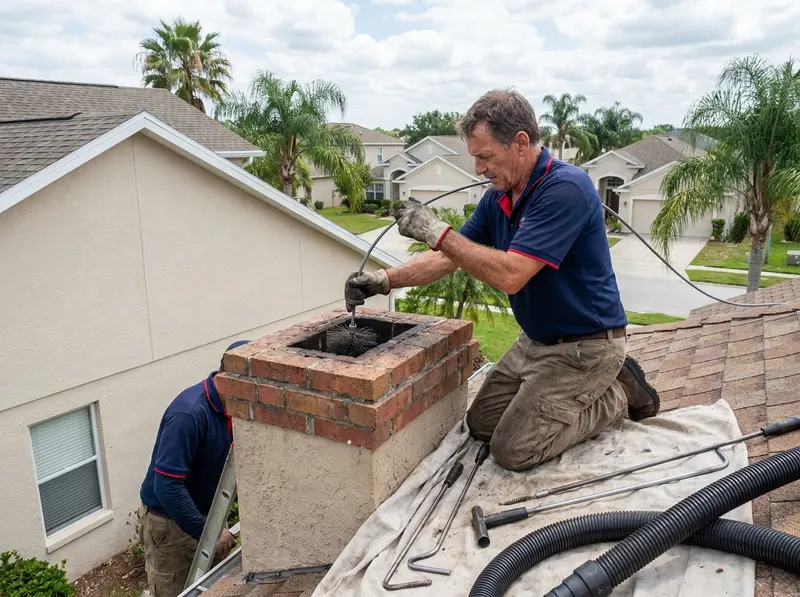
Orlando chimneys get blocked for reasons tied to the local environment. Chimney swifts and other birds nest in open flues through spring and summer, and the oak canopy over neighborhoods like College Park and Audubon Park drops leaves and twigs that collect on smoke shelves and dampers. Older homes near Delaney Park and Thornton Park often have masonry that sheds small pieces of mortar or brick into the flue over decades. A blocked flue traps smoke and carbon monoxide indoors, which is why removal is treated as a safety priority rather than cosmetic cleanup.
Blockage removal fits when you can see or smell a problem: smoke pushing back into the room, a musty or animal odor from the fireplace, visible nesting material at the top, or debris falling into the firebox. It differs from a routine sweep. A standard sweep manages creosote and general soot on a working, open flue, while blockage removal deals with a specific obstruction that is stopping airflow. The trade-off is scope. If the flue is fully open and just dirty, a sweep is the right call and costs less. If something is physically lodged in the passage, removal is the step that clears it first, and a sweep may follow once the flue is open.
Access drives both time and price. A blockage sitting just below the crown on a single-story Conway or Colonialtown home is quicker to reach than one wedged low in a tall two-story flue in Windermere or Dr. Phillips. Animal nests packed with mud and sticks take longer than loose leaf litter. Every removal starts with a camera look so the obstruction is located before any tool goes in, which avoids guesswork and unnecessary work. After removal, the flue is re-checked to confirm the full passage is open from the top down.
Homes near Lake Nona and Baldwin Park that sit under new tree growth benefit from a cap check during the same visit, since a missing or damaged chimney cap is the most common reason animals and leaves get in. We do not perform pest extermination or wildlife trapping of live protected birds; the focus is safe removal of accessible obstructions and debris. Where a live animal or a protected species is present, we advise the appropriate next step before clearing the flue.
| Leaf and light debris removal | $150 - $275 |
| Bird or small animal nest removal | $225 - $400 |
| Heavy or deep blockage with masonry debris | $300 - $450 |
| Camera inspection with removal | included in job price |
Signs of an Orlando chimney blockage include smoke drifting back into the room, an animal or musty odor from the fireplace, visible nesting material at the top, or debris landing in the firebox. A camera inspection confirms the exact location and cause before removal.
Yes, nest and debris removal is handled throughout Orlando neighborhoods including College Park and Audubon Park, where oak canopy and open flues make nesting common. Removal targets accessible material once it is confirmed no live protected birds are present, and we advise the correct next step if wildlife is active.
Animal and debris blockage removal in Orlando typically ranges from about $150 to $450, depending on the type of blockage and how easily it can be reached. This is a ballpark; the exact price is confirmed during the free on-site assessment before any work starts.
If you burn wood a few times each winter, choose a standard sweep and Level 1 visual inspection once a year. If you are buying or selling a home, or you smell smoke inside during a burn, choose a Level 2 inspection with an internal camera scan that documents the flue liner. If you rarely use the fireplace but want it checked before guests arrive, a straight safety inspection without a full sweep may be all you need. The trade-off is simple: a camera inspection costs more and takes longer, but it finds cracked flue tiles and hidden blockages a visual-only check can miss. Gas fireplaces still need attention too, but they get a burner and venting check rather than a creosote sweep.
| Standard sweep + Level 1 inspection | $150–$350 |
| Level 2 camera flue inspection | $250–$500 |
| Chimney cap supply & install | $200–$650 |
| Heavy / glazed creosote removal | $300–$800 |
| Crown or flashing repair | $250–$900+ |
| Gas fireplace service | $120–$300 |
| Animal / debris blockage removal | $150–$400 |
Your exact price is confirmed before any work begins.
Orlando homes burn far fewer fires per year than northern houses, so creosote tends to build slowly and get ignored for years until a cold snap sends everyone to the fireplace at once. The bigger local threat is water: the summer storm season and year-round humidity work into open flue tops and cracked crowns, and older masonry chimneys in College Park, Delaney Park, and Colonialtown often need cap and crown attention more than heavy sweeping. Newer builds out toward Lake Nona and Windermere often have prefab metal fireboxes and gas logs that need venting and burner checks rather than a creosote sweep.
Neighborhoods we cover: College Park, Baldwin Park, Lake Nona, Thornton Park, Delaney Park, Audubon Park, Conway, Dr. Phillips, Windermere, Colonialtown.
A standard chimney sweep with a Level 1 safety inspection in Orlando typically runs $150 to $350. The exact price depends on flue condition, roof access, and how much creosote has built up. The figure is a ballpark; we confirm it on-site before any work starts.
Most Orlando homeowners who burn wood should have the chimney swept and inspected once a year, ideally before the season starts. Because Central Florida fireplaces get lighter use, buildup is often slower, but a yearly inspection still catches water damage, cracked crowns, and animal blockages before they become expensive.
Summer and early fall, June through September, are the best times to book a chimney sweep in Orlando because demand is low and scheduling is flexible. Late fall through December fills up fast as cooler weather arrives, so book two to three weeks ahead in November and December if you want a specific date before the holidays.
Yes, we service gas log and vented gas fireplaces across Orlando, including neighborhoods like Lake Nona and Windermere where prefab and gas units are common. Gas fireplaces do not need a creosote sweep, but the burner, venting, and glass should be cleaned and inspected each year for safe operation.
Yes. For Orlando home sales we recommend a Level 2 inspection, which includes an internal camera scan of the flue liner. This documents cracked tiles, gaps, and blockages that a visual-only check can miss, and gives buyers and sellers a clear written record of the chimney's condition. Text a photo of your fireplace to (321) 524-3630 and we can tell you what level of service fits.